The New Playing Field: Why Lifestyle Brands Are Looking to Sports for Growth

For decades, sports marketing followed a fairly predictable formula. Athletic brands sponsored athletes. Beverage companies bought signage. Financial institutions put their names on tournaments and arenas. If a brand wanted into sports, there was usually an obvious connection between what it sold and the people playing or watching.
That line is disappearing. Beauty, wellness, fashion and lifestyle brands are increasingly showing up in spaces that once would have seemed outside their traditional marketing plans. More importantly, the smartest brands are not simply buying visibility. They are finding ways to become part of the culture and experience surrounding the sport.
One of the clearest examples came from an unlikely place: Madison Square Garden. Saie founder Laney Crowell attended a Knicks game and noticed something surprisingly simple. The arena was filled with women, but very little of the advertising seemed to be speaking directly to them. That observation eventually led Saie to become an official partner of the New York Knicks, creating a presence that extended beyond signage and into experiences and community.
It is a great marketing story, but the bigger lesson is not that beauty belongs in basketball. It is that brands should pay attention to who is actually in the room.
Sports audiences are no longer as easily categorized as they once were. A woman attending a basketball game does not stop being a beauty consumer when she walks through the arena doors. A golfer does not stop caring about fashion, skincare, travel, wellness or business when she steps onto the first tee. We bring all of those interests with us.
That creates tremendous white space for brands willing to look beyond traditional category alignment.
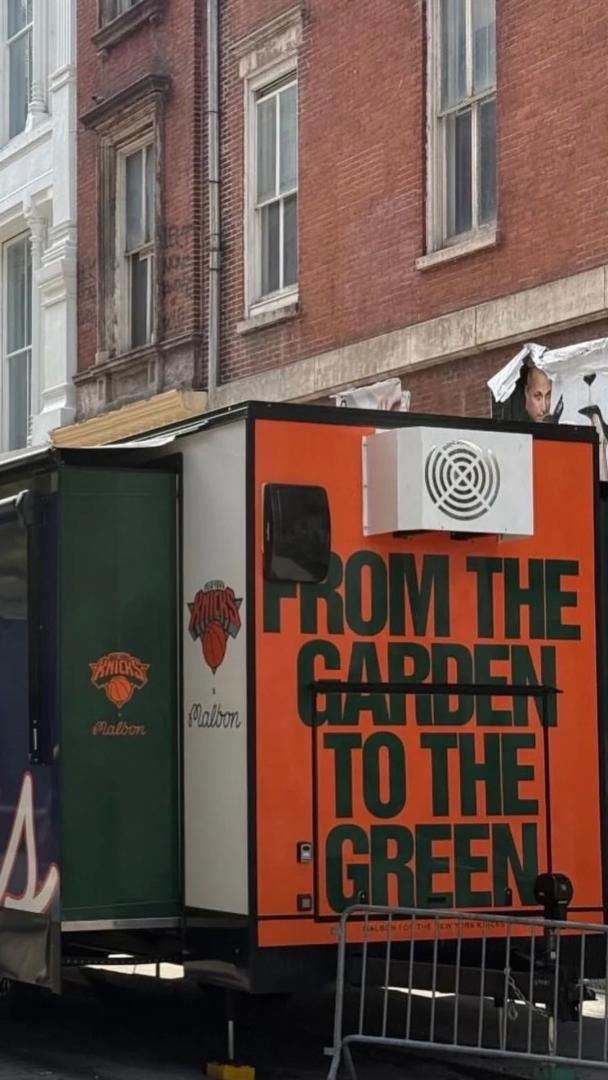
I saw another version of this firsthand recently at a Malbon x New York Knicks event in New York. Golf and basketball might not seem like an obvious pairing on paper, but in the room, it made sense. Even the activation’s “From the Garden to the Green” messaging played directly into the crossover. Malbon has built a brand that extends beyond the golf course into fashion, culture and lifestyle, while the Knicks sit at the intersection of sports, entertainment and New York culture. The connection was not really about golf meeting basketball. It was about understanding the consumer who moves comfortably between both worlds.

Golf May Be One of the Best Examples
I have spent nearly two decades working in and around the golf industry, and one of the most interesting shifts I have watched is golf increasingly being understood as more than a sport. It is also lifestyle, hospitality, travel, fashion, wellness, community and business.
That makes the golf ecosystem particularly interesting for brands that may never have considered themselves “golf brands.”
Beauty and wellness companies are already finding natural entry points into the game. Sun protection has an obvious place during a four or five-hour round. Wellness and recovery connect naturally to performance. Fashion has become increasingly relevant as personal style continues to influence golf culture. Hospitality has always been part of the game because so much of golf is built around relationships and shared experiences.
The opportunity is not necessarily to put a beauty logo on a tee marker and call it a partnership. The better question is: What does this audience actually need, want or care about while they are here?
The strongest partnerships start with the consumer experience and build the brand exposure around it.
Stop Asking Whether Your Brand Belongs There
Instead, ask: Does your consumer belong there?
That small shift can dramatically expand where a founder looks for growth. A beauty company may discover its consumer at a basketball game. A wellness brand may find her on a golf course. A fashion company may find her at a tournament. A hospitality brand may find her inside a women’s business community built around sport.
Sometimes the opportunity is sitting in plain sight because competitors have not thought to look there yet.
That is what makes the Saie example so interesting to me. The female audience was already at Knicks games. Nobody needed to create that consumer or convince her to enter the arena. The opportunity came from recognizing an audience that was already there and asking why more brands speaking to her were not.
The same principle applies when a golf lifestyle brand can make sense inside Knicks culture. The opportunity is not always about finding a new audience. Sometimes it is recognizing that your audience already exists in places your category has traditionally ignored.
That is not simply a sponsorship strategy. It is consumer intelligence.
The Opportunity Is Bigger Than Sponsorship
Founders also should not assume that entering sports requires the budget for a major professional team partnership. There are countless ways to enter these communities at a much more approachable level.
A brand could create a thoughtful product experience at a women’s golf event, collaborate with an athlete or creator whose audience genuinely overlaps with its own, support a community, build a hospitality experience, develop content around the intersection between the brand and the sport, or simply provide something people actually need in that moment.
In my own work, I am constantly looking at relationships through this lens. Some of the most interesting opportunities are not between the two people or brands you would automatically put together on paper. They happen when you understand enough about both sides to recognize the overlap that may not be immediately obvious.
That is also why I believe the most valuable partnership is not always the one with the biggest logo or the largest audience. Sometimes it is the one that makes someone stop and think, “That makes so much sense. Why hasn’t anyone done that before?”
Consumers are smart enough to recognize when a partnership feels manufactured. Putting two recognizable names beside one another may generate impressions, but it does not automatically create affinity. There still needs to be an authentic answer to three basic questions: Why these two? Why here? Why now?
Look Beyond Your Industry
One of the easiest traps in marketing is continuing to look for customers and opportunities in the same places everyone else in your industry is looking.
Your next customer, collaborator or growth opportunity may not be sitting at your industry’s conference, following your competitors or reading the publications you have always targeted. She may be somewhere completely different.
That is why I think founders should stop defining their audience solely by what they buy and start understanding how they live.
Where do they spend their time? What communities matter to them? What experiences are they investing in? What else are they interested in? Where are they already showing up, and who is speaking to them when they get there?
Sports provide an unusually powerful environment for answering those questions because they bring identity, community, emotion, entertainment and experience together in one place. Golf, in particular, continues to open itself to a much broader lifestyle ecosystem, and that creates room for brands that would have been considered outsiders not very long ago.
The brands recognizing this are not simply trying to enter sports.
They are paying attention to where their consumers are already going and finding an authentic reason to meet them there.
More about Meredith

Meredith Otero is the Founder of MET Marketing & Media, where she works at the intersection of strategic partnerships, media, relationship development and business growth across golf, sports and hospitality.
With nearly two decades of experience in the golf industry, including more than a decade in private clubs, she has built her career around connecting people, ideas and opportunities in ways that create meaningful long-term value.
Meredith serves on the Board of Directors for Women in the Golf Industry (WIGI), mentors through the USA Basketball Foundation’s #WomenintheGame initiative, and was featured in KNOW Magazine’s inaugural 2026 Women in Sports issue. A writer, speaker, moderator and mentor, her work explores relationship capital, leadership, business development and the evolving influence of women across golf, sports and business.
In a space balancing tradition and trend, she leverages brand authenticity to drive measurable growth and long-term value. She began her career at the front desk of a New Jersey private golf club, quickly rising into executive-level roles.
In 2020, she launched MET Marketing to bring a more agile, modern approach to an evolving industry. Beyond her work, Otero advocates for young women in leadership, particularly former athletes navigating a new "season" in life, mentoring and creating visibility for the next generation by contributing to industry conversations through speaking and published content.